
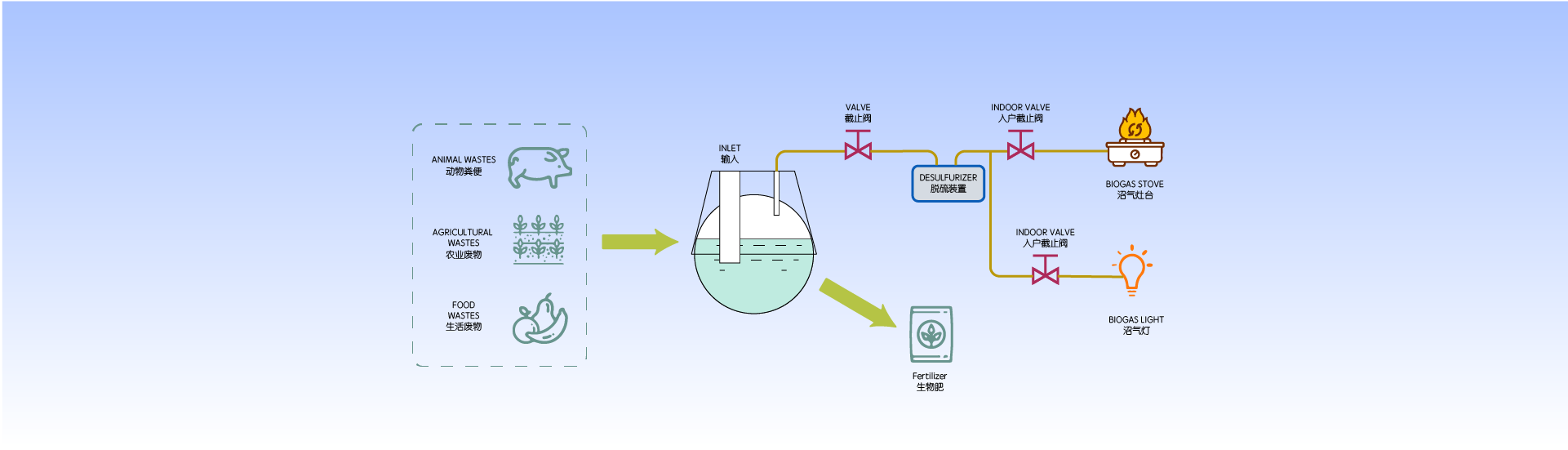

Simplified Diagram of Rural Biogas Application
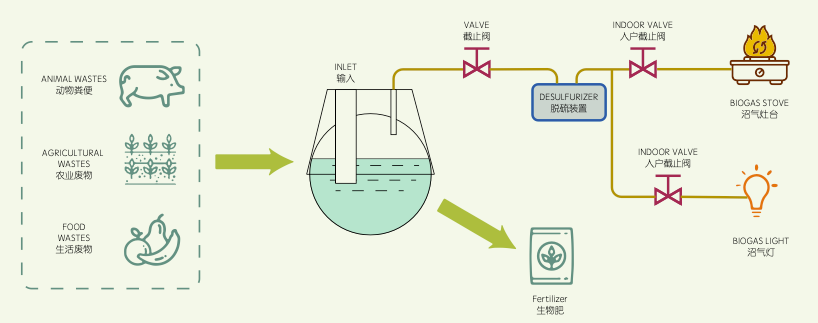
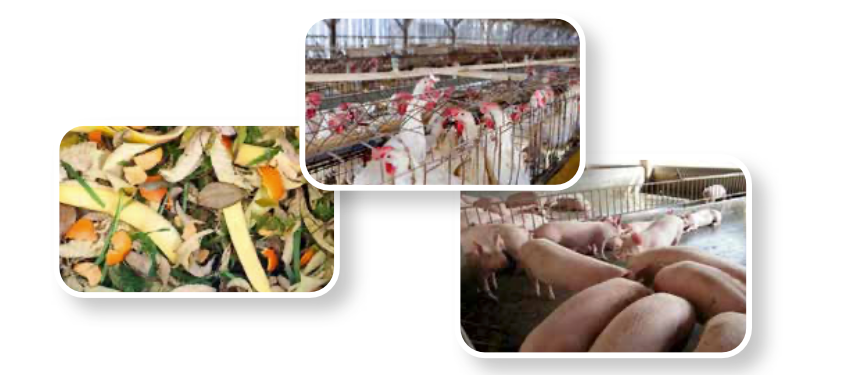
- Feedstock: sources can include animal manure, agricultural waste, and food waste.
- Output: The biogas digester produces biogas and fertilizer.
- Energy generation: Biogas accumulates in the water tank and is transported to stoves and lamps to meet daily living needs.
- Eco friendly The fertilizer is organic and environmentally friendly. It can be recycled to farmland as a natural and harmless fertilizer.
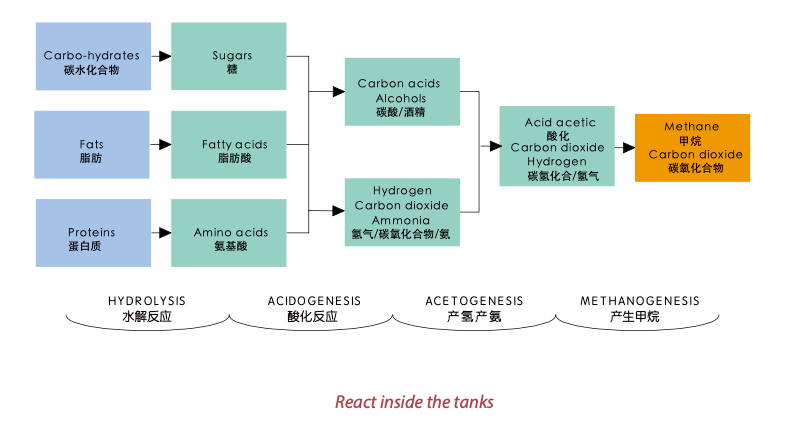
The process reaction inside the Bio tank
The process of biogas production in a biogas digester involves parallel steps occurring both temporally and spatially within the digestion tank. The overall rate of the decomposition process is determined by the slowest reaction chain.
In a biogas generator, the treatment liquid contains vegetable-based substrates such as cellulose, hemicellulose, and lignin. Here, hydrolysis is the rate-determining process. During hydrolysis, a relatively small amount of biogas is produced. The biogas yield reaches its peak during the methanogenesis stage.
Who needs this equipment?
Household-scale biogas digesters are suitable for treating waste generated by decentralized livestock and poultry farming.
A typical 8-cubic-meter household biogas digester can process the manure from 8–20 pigs, 1–2 cattle, or 150–200 chickens, producing approximately 0.8–2.0 cubic meters of biogas per day.
For larger-scale process requirements, multiple biogas digesters can be combined to meet the demand.
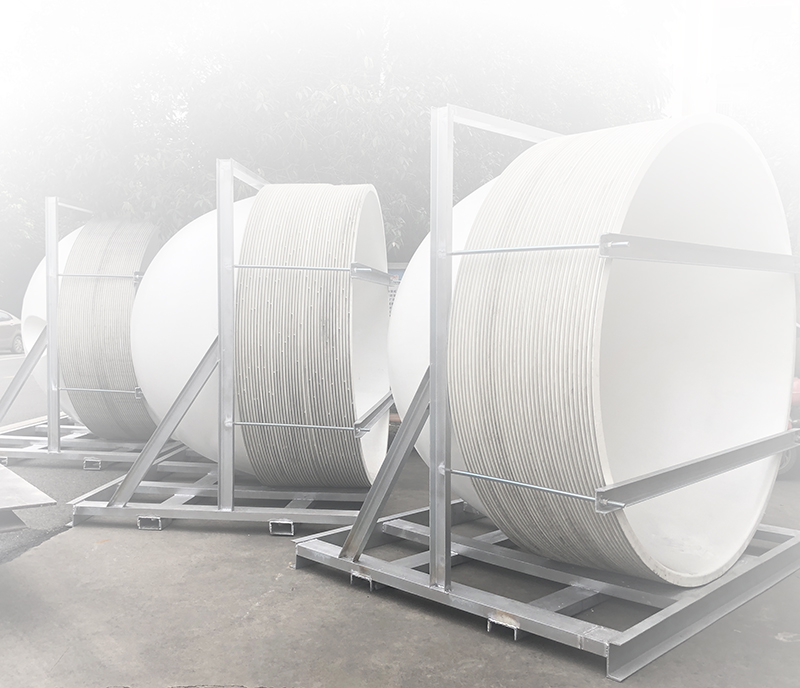
Highly reliable biotank
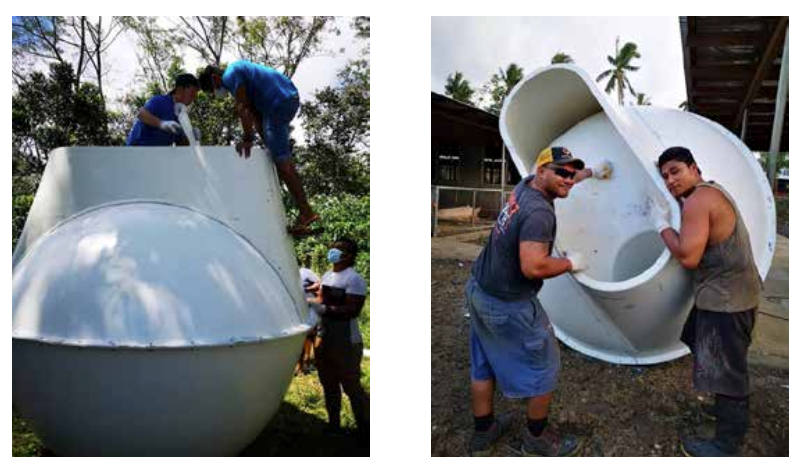
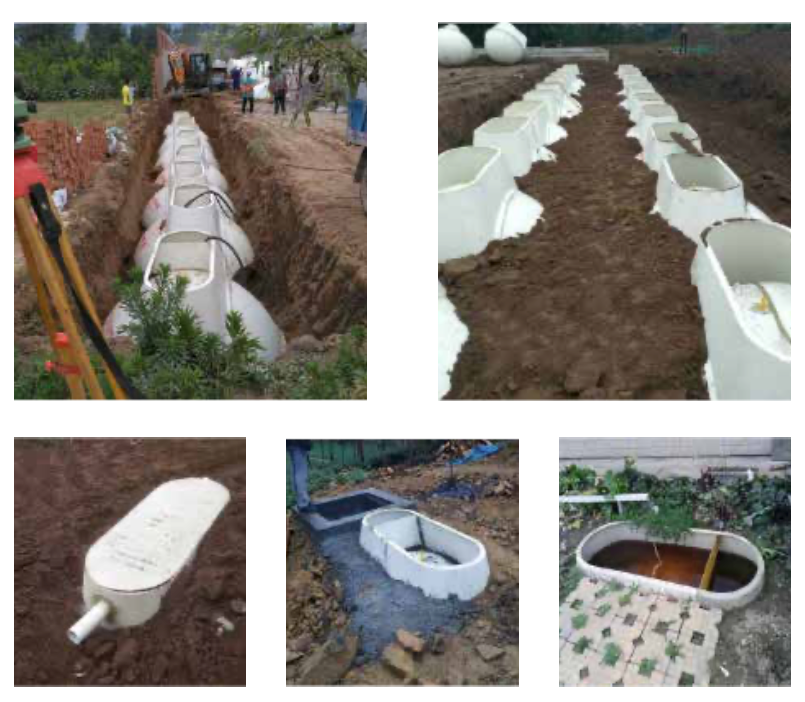
onsite installation for media farm
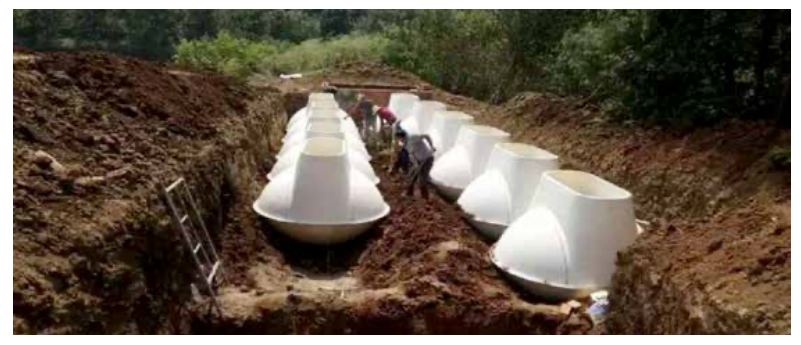
Installation details
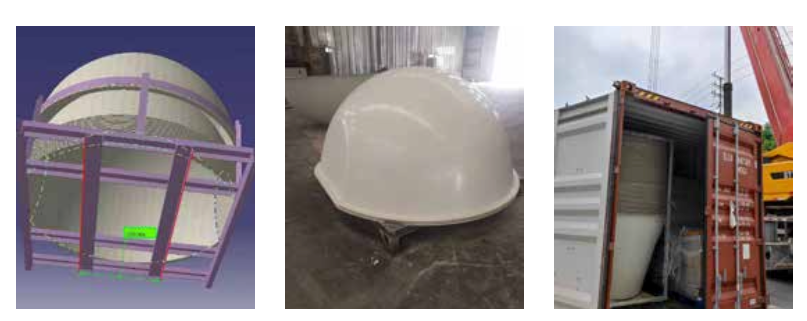
Design and tansportation